Alt. featured artist series: Jorge Ariel Escobar
Jorge Ariel Escobar
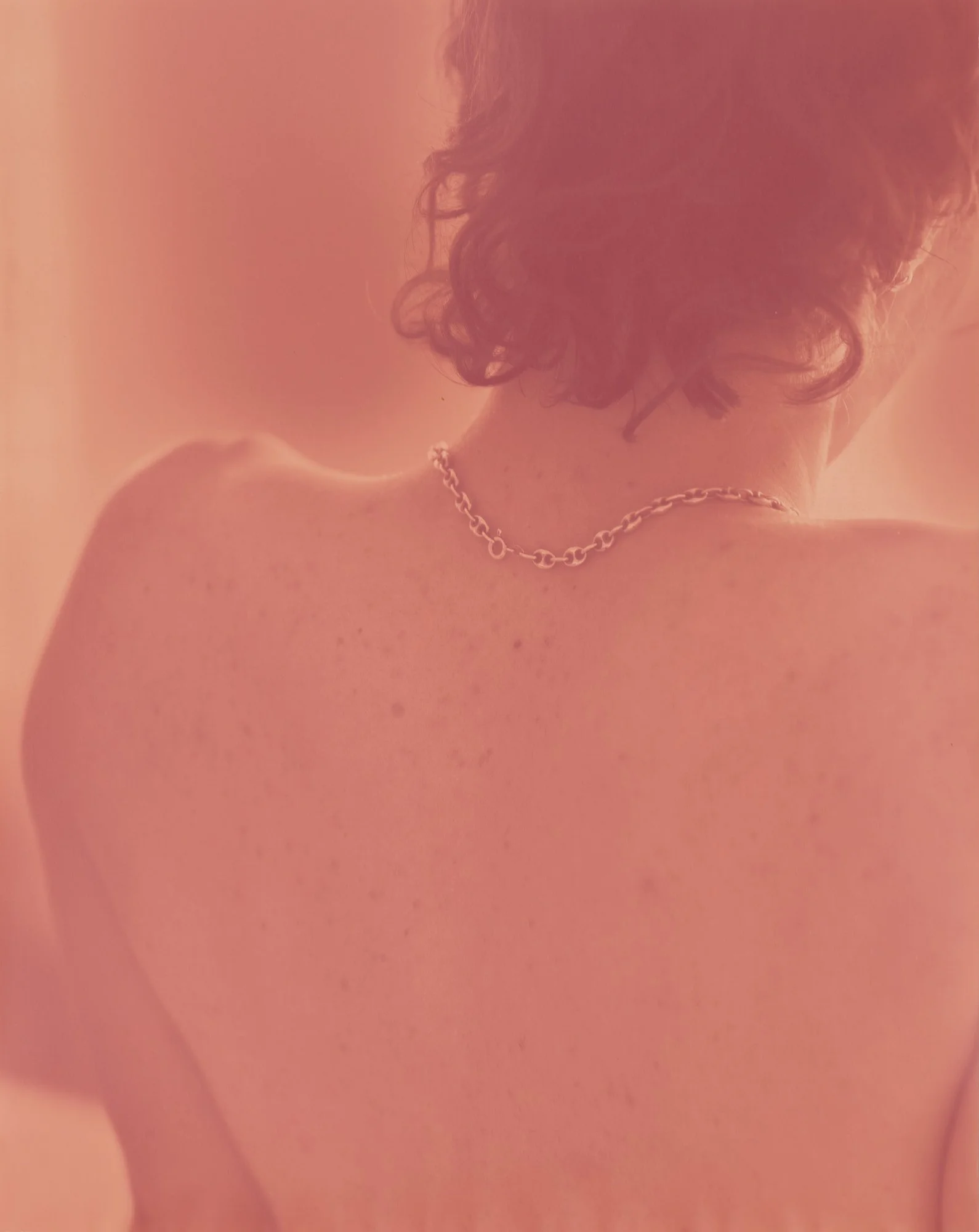
Based in Milwaukee, Escobar is a queer, Latinx image-maker whose photographic practice explores intimacy, desire, and the ephemeral nature of queer connection. His photographs center on chance encounters between queer men, rendering the male form with tenderness and vulnerability through a softer lens.
A BIG thank you to our guest interviewer and blog writer, Miranda Dunlap, for all of here hard work and dedication to spotlighting our featured artists!
We are excited to be hosting our fourth gallery show, ALT. - A Photo Opp Gallery opening on October 16, 2026 at our Photo Opp studio space! See Jorge’s work and the work of our three other featured artist on our gallery page.
Community Submissions are open through August 10, 2026!
Thank you to our Presenting Sponsor:

Q: What does the theme “ALT” mean to you personally or artistically?
A: I've always been drawn to alt processes of all kinds.
It allows me to be more tactile with photography. I think oftentimes with the photo medium, people are so used to it living digitally, or it being this sort of hands-off thing. For instance, you send your photos to get printed, and then the prints come back. So, what I've enjoyed about alt processes is the fact that it allows me to play with how I can put more of my hand into my photographic work and not have it feel so disconnected.
Q: Can you describe your creative process when starting a new piece or photo series?
A: A lot of my actual photography is typically done digitally. I do still work with film cameras, but oftentimes I have a film camera and a digital camera. My work involves portraiture, it involves the human form, specifically the male form, because I am a gay man. I very much am interested in the male form in that manner, and viewing it as sort of this interesting space of creating landscapes, essentially, but with the body.
I tend to pull a few images that I'm most excited about or drawn to, I then take those images, I convert them to black and white in Photoshop, then I invert them, creating a digital negative. Then I turn these digital images into a negative that then allows me the versatility to bring it into the alternative analog medium.
Right now I work a lot with lumen printing, which is taking the traditional black and white dark room print, silver gelatin print, and then rather than exposing it with the enlarger, I'm exposing it with UV light. I've been a little bit more interested in not being so intense with my exposures, and sticking with shorter exposures, to have a bit more of a softer imprint, which conceptually for me speaks more to my work about the ephemerality of queer connection.
Q: Was there a moment, subject, or experience that pushed you to see things differently?
A: It’s more so the way things have occurred over time. A lot of my work early on, I was doing a lot of self-portraiture work. A lot of that was due to me being more of an introvert, and then also finding myself feeling more comfortable with my own self, and knowing that I have a vision in my head, this is what I want to do. I had it in my head that I am the best person to get exactly what I want without having to direct someone.
I went to grad school for my MFA at UW-Madison and there in my first year, I found myself really reflecting on myself, and my relationship to others, specifically queer men and gay men. I was going through this phase of starting to feel more comfortable with my sexuality, and understanding myself as a sexual being. Taking a queer theory course with one of my mentors, Jill Cassid, I shifted my focus to being about me, but focusing on other people within my community, the LGBTQ, gay men community.
That shifted my way of thinking with making images. It made me feel more open to thinking of photography more as a collaboration versus like a singular thing. Now when I work with a subject, I view them as a collaborator as well. I try to make it feel more of a push-pull scenario, versus it being, like, me directing. I want them to still have agency.
Q: What role does risk, imperfection, or breaking convention play in your work?
A: I actually welcome imperfections. With lumen printing …you're working with a fixer. I'm also working with hypoclear or some kind of clearing agent to remove the fixer, and then a final wash. Fixing has always been something that I get very impatient with, if I'm being honest. If you don't fix it long enough, when things start to dry down, you might start to get fixer stains, which are purple spots that appear on the print.
Initially, when I would be making these, whenever I would get a fixer stain, it would really make me mad because I was going for perfection, I was going for a very clean print. Over time I've become a lot looser with thinking about those stains that I often get.
I sometimes view the fixer stains as sort of like a representation of my hand, and my hand being there, my hand having some action to it. I think of it as my touch on the person, the idea of the touch of someone when you're intimate with someone. The idea that you left some sort of subtle impression on someone that is now physically represented there.
Q: What do you hope viewers feel, question, or notice when they experience your work?
A: I hope they reflect on their own desires.I talk about desire in my work a lot. It’s always this undercurrent in my work. A lot of people that I photograph are, for the most part, platonic friends. I like people to think that they could be possible lovers, or they could be possible past relationships, because that's all part of it. My work is very much highlighting the very fluid nature of queer relationships. I think we all grew up with this idea of monogamy and in the queer community, specifically with gay men, it's becoming much more common to have multiple partners, to be in a more polyamorous relationship, or be in an open relationship.
If someone identifies as straight, heterosexual, I still want them to reflect with the images as speaking to their own desires, their own like past flings, the ones that got away. It's about giving a moment to remember and reflect on those people that were only short-term brief encounters in our lives, yet they still hold some space in our life.
And then from a more aesthetic standpoint, I hope people who maybe aren't familiar with lumen printing are excited to see these prints as a new way of viewing photography.
Q: What advice would you give to someone considering submitting work to our ALT Gallery?
A:Submit work that you are personally excited about. Oftentimes people really overthink open calls. I know I do. People tend to really overthink what the gallery may be asking for, what they might be wanting. Submit work that you personally are excited about submitting, rather than catering necessarily to what the call is asking for.
It's always great to hear feedback before you submit, so if you have a good group of friends who are willing to give feedback, that's always good.